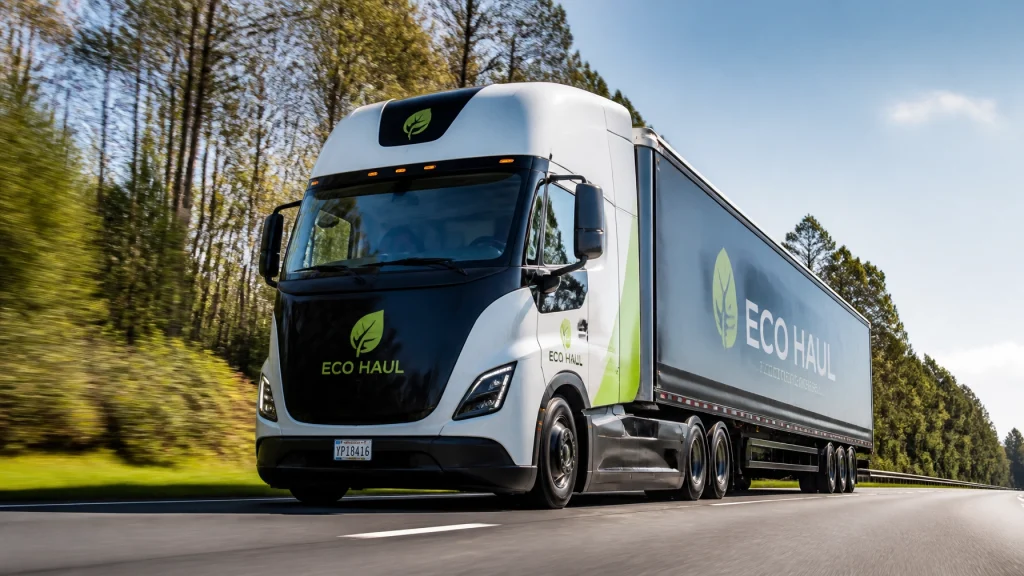
7 Mistakes You’re Making with Electric Truck Branding (and How to Fix Them)
Most fleet managers believe that simply deploying an electric vehicle is enough to signal their commitment to sustainability. They assume the silent hum of the motor and the lack of a tailpipe will speak for themselves. However, most brands think they are communicating a "green" message until they realize that, without strategic fleet branding, their multi-million dollar investment remains invisible to the very public they are trying to impress. In the rapidly evolving landscape of 2026, where goTrucking.News reports a surge in Class 8 electric truck adoption, the difference between a high-impact mobile billboard and a missed opportunity lies in the execution of your vehicle graphics.
The "Brochure-on-Wheels" Blunder
One of the most frequent errors in truck advertising is treating the expansive side of a trailer like a printed brochure. Designers often succumb to the temptation of including exhaustive lists of services, multiple phone numbers, social media handles, and dense mission statements. On a stationary object, this might be informative; on a vehicle traveling at highway speeds, it is illegible noise. At We Ship Green, we advocate for the "three-second rule." If a commuter cannot identify your brand, your primary value proposition, and a clear call to action within three seconds, your vehicle wraps have failed.
To fix this, prioritize a singular, dominant message. Your logo should be accompanied by a high-contrast tagline that emphasizes the "why" of your electric fleet: such as "100% Electric Delivery" or "Zero-Emission Logistics." By stripping away the clutter, you transform your fleet into a series of powerful mobile billboards that command attention. High-fidelity typography and a minimalist approach ensure that your message survives the high-velocity environment of the American interstate.
Superficial Sustainability and the Greenwashing Gap
As electrification moves from a niche pilot to a standard operating procedure, the threat of "greenwashing" looms large. A common mistake is utilizing vague, overly ambitious claims that cannot be substantiated by data. Branding a truck as "Completely Carbon Neutral" when the energy grid powering it is coal-heavy can invite skepticism from sophisticated enterprise customers. In 2026, authenticity is the currency of logistics marketing.
The solution lies in data-backed transportation marketing. Instead of abstract promises, use specific, verifiable proof points. Link your branding to actual performance metrics: such as "Powered by 100% Solar at our Teltrans Hub" or "Reducing Urban Emissions by 40%." This transition from generic "green" badges to quantifiable conservation efforts builds long-term trust. When your fleet advertising reflects the reality of your operations, it becomes a powerful tool for customer acquisition rather than a liability.

Visual Voids in Night Visibility
Electric trucks are often lauded for their sleek, futuristic aesthetic, yet many fleet managers neglect how these vehicles appear after sunset. Traditional vehicle graphics can lose their impact in low-light conditions, turning your expensive truck side advertising into a shadowy silhouette. This is a significant oversight, especially for regional fleets that operate during late-night or early-morning shifts. Your fleet branding should be a 24-hour asset, not a part-time one.
Integrating reflective technology and high-visibility materials is the essential fix. Modern vinyl technology allows for reflective elements that remain subtle during the day but glow vibrantly when caught by headlights at night. This not only enhances the safety of your operators but also doubles the impressions generated by your transit advertising. By ensuring your "electric" message is visible around the clock, you maximize the return on your investment in sustainable logistics.
Disregarding Digital Dynamics
In a world where physical and digital realms are increasingly intertwined, many vehicle wraps remain stubbornly analog. A static logo is no longer sufficient to drive deep engagement. Many brands fail to provide a bridge from the physical presence of the truck to a digital conversion point. This results in "lost" leads: individuals who were impressed by your electric fleet but had no immediate way to learn more or request a quote.
The integration of smart fleet advertising via QR codes and shortened, memorable URLs is the professional standard for 2026. At MobileHwyAdvertising.com, we recommend placing large, scannable elements on the rear and sides of the vehicle where they can be safely captured at rest stops or in traffic. These digital touchpoints should lead to specific landing pages that detail your conservation efforts and service capabilities, effectively turning every truck into a high-converting lead generation tool.

Neglecting the Aerodynamic Canvas
Electric trucks are highly sensitive to aerodynamic drag, which directly impacts range and efficiency. Many fleets utilize wind skirts and fairings to improve performance, yet they leave these surfaces blank. This is prime real estate for truck side advertising that is frequently overlooked. By ignoring these components, you are wasting valuable square footage that could be used to reinforce your brand identity.
Utilizing wind skirt graphics is a sophisticated way to expand your mobile billboard footprint without compromising vehicle performance. These lower sections of the trailer are at eye level for passenger vehicles, making them ideal for high-impact messaging. Coordinating the design of your wind skirts with the main trailer wrap creates a cohesive, professional appearance that signals a high level of attention to detail and a commitment to maximum operational efficiency.
Infrastructure Invisibility and Solar Synergies
Your commitment to green logistics does not end with the truck; it includes the infrastructure that powers it. A common branding mistake is leaving solar charging stations and off-grid power units unbranded. When a customer or a passerby sees a sleek electric truck charging at a generic station, they miss the full story of your energy independence. Infrastructure is a visible manifestation of your investment in future-proofing your business.
We recommend branding your charging assets, such as the EV ARC™ solar chargers utilized by our partners at EVAcrossAmerica.com. By applying consistent vehicle graphics styles to your solar arrays and charging pedestals, you create an "ecosystem of sustainability." This holistic approach to branding demonstrates to stakeholders that your environmental stewardship is integrated into every facet of your logistics chain, from the sun to the final mile.

Generic Graphic Gestures
The final and perhaps most detrimental mistake is treating an electric truck exactly like a diesel-powered one in your design language. If your electric fleet looks identical to your legacy fleet, you lose the opportunity to highlight your innovation. EVs represent a shift in technology and values; your fleet branding should reflect that evolution. A generic "business as usual" design fails to capture the imagination of a public increasingly concerned with environmental impact.
To correct this, develop a distinct visual identity for your electric assets. This might involve a specific color palette: utilizing the organic greens and cool neutrals championed by We Ship Green: or unique geometric patterns that evoke a sense of digital precision. By creating a "sub-brand" for your electric fleet, you make it easy for the public to recognize your leadership in the transition to sustainable transportation. This distinctiveness is what transforms a simple delivery vehicle into a powerful symbol of progress.
Cultivating a Greener Future with We Ship Green
The transition to electric fleets is an monumental undertaking that requires more than just new hardware. It requires a fundamental shift in how we communicate our values through logistics marketing. By avoiding these seven common branding mistakes, you can ensure that your fleet is not only efficient and sustainable but also a highly effective marketing asset.
At We Ship Green, we are dedicated to helping fleet managers and brands navigate this transition through expert consulting and innovative fleet advertising solutions. Whether you are looking to optimize your vehicle wraps or integrate solar charging via Teltrans.net, our ecosystem is designed to support your journey toward environmental stewardship. Let your fleet be the messenger for a cleaner, quieter, and more sustainable future.
Contact Information:
We Ship Green
Website: weshipgreen.com
Email: info@weshipgreen.com
Industry Partners: MobileHwyAdvertising.com | EVAcrossAmerica.com | Teltrans.net
News Source: goTrucking.News