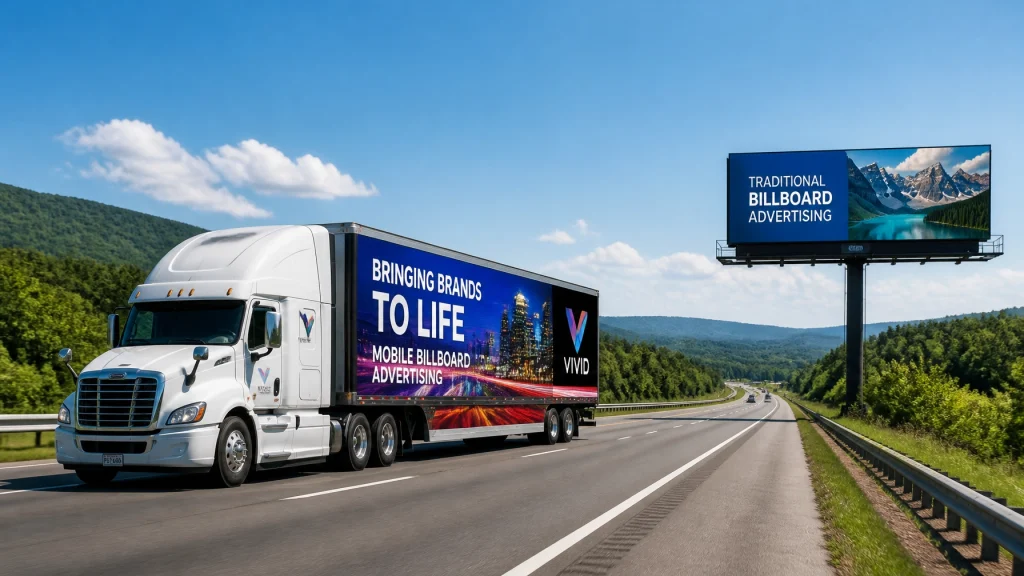
Mobile Billboards Vs. Static Billboards: Which Is Better For Your Brand?
Most marketing directors believe that the path to market dominance is paved with massive, unmoving concrete foundations, until they witness the disruptive power of mobile assets. For decades, the static roadside billboard has been the undisputed monarch of the outdoor advertising landscape, providing a consistent, albeit stationary, presence for brands across the globe. However, as the logistics and transportation marketing sector evolves, a new challenger has emerged to reclaim the attention of the modern consumer. Mobile billboards, particularly those integrated into the existing infrastructure of freight and logistics, are redefining what it means to be seen. By transforming the very vehicles that move our economy into high-impact marketing channels, brands are discovering that agility often outweighs tradition in the quest for superior return on investment.
Pioneering Promotion: Perceiving the Power of Mobile and Static Signage
The fundamental distinction between static and mobile billboards lies not just in their physical movement, but in their psychological impact on the viewer. Static billboards are frequently relegated to the background of a daily commute; they become part of the "scenery," leading to a phenomenon known as "banner blindness" in the physical world. In contrast, truck advertising introduces a dynamic element to the environment. A high-definition vehicle wrap on a moving semi-truck creates a "pattern interrupt", a cognitive trigger that forces the brain to pay attention to a moving object. Research indicates that mobile advertising generates approximately 2.5 times more attention than its static counterparts. This heightened engagement is a critical component of successful transportation marketing, as it ensures that the brand message is not just glanced at, but truly processed by the target audience.

When evaluating the effectiveness of transit advertising, one must consider the sheer volume of impressions. A single truck within the MobileHwyAdvertising.com network, which boasts over 21,000 trucks, can generate between 30,000 and 70,000 impressions per day. Unlike a static board that is limited to the traffic flow of a single intersection or highway stretch, a mobile billboard travels through diverse demographic zones, urban centers, and residential neighborhoods. This mobility allows for hyper-local targeting and the ability to "follow" the audience. If a static billboard is a lighthouse, a mobile billboard is a searchlight, actively seeking out and illuminating the brand to potential customers wherever they happen to be. For fleet managers and brand owners alike, this represents a significant shift from passive exposure to active engagement.
Strategic Solutions: Sustainability and Sophisticated Systems
At the heart of this revolution is Teltrans.net, the media holding company that orchestrates these complex advertising ecosystems. By leveraging deep industry expertise, Teltrans provides a centralized platform for logistics marketing that bridges the gap between traditional freight operations and modern brand storytelling. This synergy is perfectly exemplified by We Ship Green, an initiative dedicated to sustainable fleet solutions. In an era where corporate social responsibility is a primary driver of consumer loyalty, the ability to advertise on a fleet that prioritizes environmental stewardship is invaluable. We Ship Green enables brands to showcase their commitment to energy conservation and carbon-reduced shipping while simultaneously boosting their visibility through high-impact mobile media.

The environmental impact of advertising is a growing concern for forward-thinking organizations. Traditional static billboards often involve significant material waste, including heavy vinyls and the electrical consumption of lighting systems that are permanently fixed in place. We Ship Green offers a more integrated approach. By utilizing the existing real estate of trailers and delivery vehicles, we minimize the need for additional physical structures. This is not merely a marketing tactic; it is a fundamental reimagining of the logistics industry as a dual-purpose asset. Our fleet partners move products to market while simultaneously moving the brand's message, creating a more efficient and cost-effective ecosystem that aligns with modern environmental standards.
Futuristic Frontiers: Factoring in the EV Evolution
As the world transitions toward electrification, the opportunities for innovative transportation marketing are expanding beyond the road. EVAcrossAmerica.com is at the forefront of this shift, introducing advertising opportunities at EV charging stations. This represents a new frontier in transit advertising, one that captures the attention of high-value consumers during the "dwell time" associated with vehicle charging. Much like the mobile billboard, these charging station displays provide a captive audience and high-recall environment. They represent a seamless integration of utility and promotion, providing a service to the driver while delivering a targeted message for the advertiser.

Comparing the ROI of these modern channels against traditional static billboards reveals a stark contrast. While static boards offer a respectable return, often cited between 200% and 500%, digital and mobile billboard solutions are frequently reporting ROI figures as high as 800%. This is largely due to the 97% recall rate associated with mobile truck advertisements. When consumers see a brand on a moving vehicle, they are more likely to remember it, search for it, and ultimately convert. By integrating these mobile assets with the emerging network of EV charging advertisements, brands can create a multi-touchpoint strategy that follows the consumer from the highway to the parking lot, ensuring a cohesive and persuasive brand narrative.
Cultivating a Greener World through Innovation
Ultimately, the choice between mobile and static billboards is a choice between the past and the future. While static billboards will always have a place in long-term brand reinforcement, the dynamic nature of mobile billboards offers a level of flexibility, attention, and ROI that is simply unmatched in the current market. Through the collaborative efforts of Teltrans.net, MobileHwyAdvertising.com, and We Ship Green, brands now have access to a sophisticated, sustainable, and highly effective marketing infrastructure. We are not just shipping products; we are shipping a vision of a more connected and environmentally conscious future.

For fleet managers looking to optimize their assets and for brands seeking to maximize their visibility, the path forward is clear. By embracing the power of mobile advertising and the burgeoning network of sustainable charging solutions, companies can ensure that their message travels as far and as efficiently as their products. The logistics industry is no longer just about the movement of goods; it is about the movement of ideas, and with the right strategic partners, those ideas can reach a wider audience than ever before.
For more information on how to integrate your brand into our sustainable fleet or to explore our mobile advertising network, please reach out to us at:
We Ship Green
https://weshipgreen.com/
contact@weshipgreen.com
Innovative Marketing & Sustainable Logistics Solutions