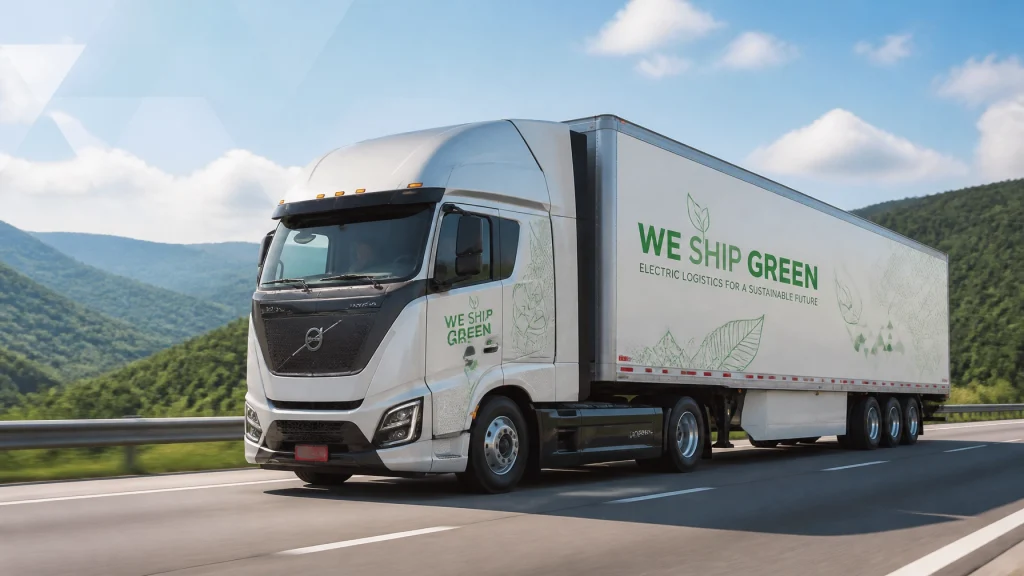
Sustainable Cruising: Uniting Electric Trucks, Solar Charging, and Fleet Advertising for a Greener Ecosystem
Most fleet operators view sustainability and advertising as separate priorities: one belongs to operations, while the other belongs to marketing. The future of transportation demonstrates that this distinction is no longer necessary. Electric trucks, renewable charging infrastructure, aerodynamic improvements, and strategic vehicle graphics can work together as one integrated platform: moving products efficiently while moving a brand’s message across the country.
At We Ship Green, we help brands and transportation partners cultivate this connected ecosystem. Through fleet partnerships, consulting, creative development, and high-impact mobile campaigns, our work brings sustainable logistics and transportation marketing into the same conversation. The result is a more visible, efficient, and environmentally responsible way to reach the market.
Sustainable Infrastructure: Building the Electric Highway
The heavy-duty transportation industry is entering a decisive infrastructure period. As discussed across current industry coverage on goTrucking.News, including reporting on technology-driven fleets and stronger trucking brand identities, the conversation is expanding beyond individual electric vehicles. Fleet managers, utilities, infrastructure developers, and public agencies are increasingly focused on connected charging corridors capable of supporting Class 8 electric trucks.
These emerging “Electric Highway” networks are designed around freight realities. Instead of relying exclusively on depot charging, corridor-based EV charging hubs can provide high-power energy along major interstate routes and logistics corridors. Pull-through truck bays, large turning radii, predictable dwell times, and chargers capable of supporting regional and long-haul operations are becoming essential components of the modern freight network.
The most promising hubs are not simply large electrical installations. They are integrated energy systems that combine high-power chargers with on-site solar generation, battery storage, and microgrid controls. Solar canopies and ground-mounted arrays can supply renewable energy during daylight hours, while battery systems can store energy and reduce the strain created by simultaneous heavy-duty charging. Microgrids may also improve resilience when utility capacity is limited or a disruption affects the larger grid.
This development gives fleet managers a practical path toward electrification. Depot charging remains well suited to predictable routes and overnight operations, while corridor hubs provide the range and flexibility required for longer journeys. Together, these systems can help fleets transition at a measured pace while supporting conservation efforts and long-term operational continuity.

Solar Charging: Powering Progress With Greater Resilience
Solar charging is more than a sustainability statement. When properly designed, it can become a strategic operating asset. On-site solar and storage may help fleets manage demand charges, reduce exposure to energy price volatility, and maintain charging capability in locations where utility upgrades are expensive or delayed.
For smaller fleets, autonomous or modular solar charging solutions can offer an incremental alternative to extensive construction. For larger logistics operations, solar canopies, industrial arrays, and battery-backed microgrids can be incorporated into a broader energy management strategy. The appropriate model depends on vehicle duty cycles, route requirements, available land, utility conditions, and future fleet expansion.
The marketing value of this infrastructure is equally significant. A solar-powered depot or charging hub transforms an invisible back-end investment into a visible demonstration of environmental stewardship. When that facility is connected to a fleet displaying clear, credible messaging, the company’s sustainability narrative becomes tangible. Customers, employees, drivers, and members of the public can see that the organization is investing in conservation through physical improvements: not merely making general environmental claims.
The EV Across America platform reflects the importance of a broader charging ecosystem. As electric transportation expands, shared information, infrastructure awareness, and corridor development will become increasingly important to fleet managers planning the next stage of their operations.
Fleet Branding: Turning Electric Trucks Into Mobile Billboards
An electric truck is an operational asset, but it is also a highly visible public statement. Its quiet operation, modern design, and connection to clean energy create a natural foundation for meaningful fleet branding. With professionally produced vehicle wraps and durable vehicle graphics, the truck becomes a mobile billboard that communicates progress wherever it travels.
Effective fleet advertising requires more than placing a logo on a door. The strongest campaigns use the complete vehicle as a carefully composed visual platform. The trailer sides, rear doors, cab, fairings, and aerodynamic components can be designed to create a unified message that remains legible at highway speeds. A clear value proposition, restrained color palette, prominent brand identification, and concise call to action allow the message to function in a matter of seconds.
Through MobileHwyAdvertising.com, brands can explore fleet partnerships that connect advertising campaigns with vehicles traveling through carefully selected markets. This form of transit advertising can provide sustained exposure across urban streets, distribution corridors, industrial districts, and major interstate routes. Unlike a static placement, a branded truck can reach multiple markets during one operating cycle, creating repeated impressions through ordinary freight movement.
For brands with established environmental commitments, vehicle wraps can communicate specific and verifiable initiatives. Messaging may reference electric delivery routes, renewable charging, reduced-emission operations, conservation partnerships, or responsible supply-chain practices. The objective is not to overstate performance. It is to present a clear connection between the company’s actual logistics investments and its public identity.

Wind Skirt Graphics: Combining Efficiency and Exposure
Aerodynamic equipment provides another important connection between green technology and truck advertising. Properly engineered side skirts and related aerodynamic enhancements can help reduce drag, supporting energy efficiency for electric vehicles and fuel efficiency for conventional units. While the equipment must be selected and installed for the specific vehicle and operating environment, its surface area also creates a valuable location for fleet advertising.
Wind skirt graphics can extend a campaign below the primary trailer panels, reinforcing brand recognition from lower viewing angles in adjacent lanes and at loading facilities. They may also be used to create visual continuity between the tractor, trailer, and larger fleet identity. When the graphic treatment highlights both aerodynamic design and environmental responsibility, an operational improvement becomes part of a broader story about conservation.
The quality of installation is essential. Vehicle graphics must withstand weather, road debris, washing, temperature changes, and the demands of long-haul service. UV-stable materials, accurate panel preparation, professional installation, and consistent maintenance protect both the vehicle and the brand. A well-maintained fleet communicates reliability; a poorly executed wrap can undermine it.
The We Ship Green Ecosystem: Connecting Operations and Outreach
A sustainable logistics campaign requires coordination across several disciplines. Fleet managers understand routes, equipment, drivers, and charging requirements. Infrastructure specialists understand energy systems and deployment constraints. Marketing professionals understand brand positioning, audience behavior, and creative execution. The We Ship Green ecosystem brings these capabilities into a connected framework.
Teltrans contributes transportation-focused consulting and industry expertise, helping organizations evaluate operational priorities and workforce considerations. EV Across America supports awareness of electric mobility and the infrastructure required to expand adoption. Mobile Hwy Advertising connects brands with fleet advertising opportunities, including vehicle wraps, truck side advertising, and mobile billboard campaigns. We Ship Green unites these capabilities through sustainable marketing and logistics solutions designed to help messages travel with the fleet.
This structure is especially valuable for organizations that want measurable progress. Campaign planning can consider route geography, audience relevance, fleet composition, charging locations, and sustainability claims at the same time. QR codes, campaign-specific landing pages, unique URLs, and route reporting can help connect physical exposure with digital engagement. Operational data, such as energy use and emissions avoided, can strengthen the credibility of the campaign when presented accurately and transparently.
Future-Focused Freight: Making Every Mile Matter
The next generation of logistics will be defined by integration. Electric trucks will need dependable charging corridors. Charging hubs will increasingly rely on solar, storage, and microgrid technologies. Aerodynamic improvements will support efficiency while creating additional branding surfaces. Meanwhile, brands will seek advertising channels that provide visibility, authenticity, and alignment with environmental values.
When these developments are planned together, the fleet becomes more than a means of delivery. It becomes a visible expression of innovation, conservation, and commercial purpose. Every route can support operational performance. Every charging site can reinforce a sustainability commitment. Every wrapped trailer can function as a mobile billboard that introduces the brand to new audiences.
We Ship Green helps fleet managers and brands move toward this future with disciplined planning, creative execution, and transportation expertise. To discuss vehicle wraps, fleet branding, truck advertising, transit advertising, or a complete sustainable logistics marketing campaign, contact us directly.
We Ship Green
274 Mt Harvard Ave
Windsor, CO 80550
Phone: (323) 255-1212
Email: info@weshipgreen.com
Website: WeShipGreen.com
Services: Marketing and Advertising Services
Contact: Contact We Ship Green
