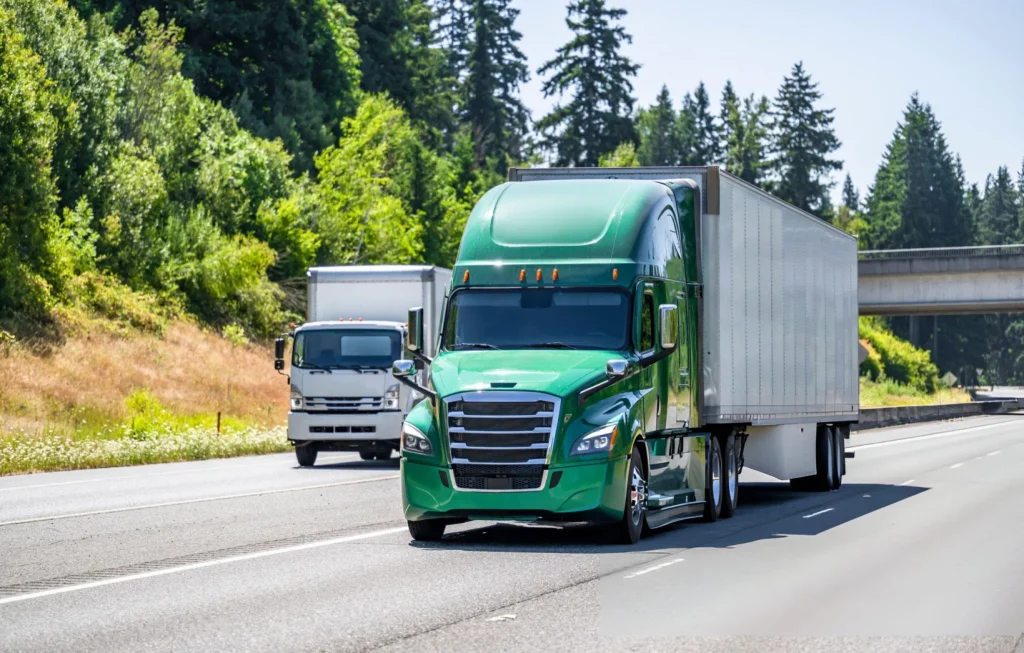
Sustainable Momentum: Accelerating Green Logistics and Fleet Advertising Across America
Most fleet managers once viewed sustainability and marketing as separate priorities. Today, that distinction is becoming increasingly difficult to defend. An electric truck can reduce emissions and operating costs. A solar charging installation can improve energy resilience and reduce idling. A professionally wrapped trailer can transform each route into a moving brand statement. When these capabilities are planned together, transportation becomes more than a delivery function. It becomes a measurable, visible, and future-ready business ecosystem.
At We Ship Green, we believe the next phase of logistics will be defined by this convergence. Green technology, conservation efforts, fleet branding, and transportation marketing can reinforce one another when they are developed through a coordinated strategy. Through the broader ecosystem of Teltrans.net, Mobile Hwy Advertising, EV Across America, and WeShipGreen.com, fleet operators and brands can cultivate sustainable momentum across the roads, depots, charging sites, and communities they serve.
Green Logistics Is Becoming a Business Imperative
Current industry discussion, including coverage and analysis available through goTrucking.News, reflects a transportation sector moving rapidly toward technology-driven operations. Fleet leaders are evaluating Class 8 electric trucking corridors, megawatt charging buildout, advanced telematics, and energy-management systems not simply because incentives exist, but because the underlying business case is becoming more compelling.
The most immediate opportunities are often found in predictable short-haul and regional routes. Electric semis can be especially well suited to depot-based operations in which vehicles return to a central location, follow consistent daily mileage, and can charge during scheduled downtime. As battery capacity, charging performance, and corridor infrastructure improve, electric trucks are positioned to take on a larger share of local and regional freight. In urban areas, the emergence of zero-emission freight zones may accelerate this transition by requiring cleaner vehicles for port, downtown, and last-mile operations.
This shift also changes how companies evaluate total cost of ownership. As incentives gradually become less certain, fleet electrification must stand on operating economics, utilization, energy management, maintenance savings, and regulatory preparedness. A sustainable fleet is strongest when environmental responsibility and financial discipline point in the same direction.

Electric Trucks, Solar Support, and Smarter Energy Systems
Electric trucks are only one component of a successful green logistics strategy. The supporting energy system is equally important. Megawatt Charging Systems may provide the power required for long-haul Class 8 operations, but large-scale charging can require substantial grid coordination, site upgrades, demand management, and careful scheduling. Fleet managers must therefore consider a portfolio of solutions rather than relying exclusively on fixed charging infrastructure.
Solar panels can provide meaningful support at depots, distribution centers, truck stops, and fleet yards. While roof-mounted or trailer-mounted solar generally cannot provide the energy required to propel a fully loaded Class 8 vehicle over long distances, it can help power auxiliary systems and reduce the electricity drawn from the grid. Solar energy may support electric auxiliary power units, liftgates, refrigeration equipment, telematics, lighting, and other operational loads. In diesel fleets, these systems can also reduce the need for extended engine idling, lowering fuel consumption and emissions while preserving driver comfort and cargo integrity.
Portable and modular DC fast-charging systems add another layer of flexibility. These systems can be deployed beyond permanent charging locations, supporting pilot routes, temporary yards, construction projects, ports, emergency operations, and growing fleets that are not yet ready for a full-scale infrastructure commitment. When paired with battery storage or renewable generation, modular charging can help fleets test electric duty cycles while reducing the risk associated with premature or oversized construction.
EV Across America provides a platform for understanding the broader electric-vehicle transition, including charging access, digital advertising opportunities, and the infrastructure developments shaping transportation across the country. Its nationwide focus demonstrates that charging locations are becoming both energy assets and communication environments.
Aerodynamics and Advertising Can Share the Same Surface
Conservation does not always require a complete fleet replacement. Aerodynamic improvements, including trailer side skirts and wind skirt graphics, can reduce drag and improve efficiency when properly selected, installed, and maintained. The potential benefit varies according to vehicle design, route profile, speed, weather, payload, and other operating conditions. Nevertheless, aerodynamic equipment remains a practical way for fleet managers to pursue fuel conservation while preparing existing assets for a lower-emission future.
Wind skirts also offer a valuable branding surface. With the right installation and material selection, functional trailer components can become part of an integrated visual identity. We Ship Green’s wind skirt graphics guide explores how conservation-minded hardware and visual communication can work together rather than compete for budget or space.

This approach illustrates an important principle of modern logistics marketing: every operational improvement can also become a credible brand narrative. A fleet equipped with aerodynamic enhancements, solar-supported systems, or electric powertrains has an opportunity to communicate those investments through deliberate vehicle graphics. The message should remain accurate and specific. Rather than relying on broad environmental claims, brands can highlight measurable actions such as reduced idling, renewable-energy use, route electrification, or participation in conservation programs.
Vehicle Wraps Turn Freight Movement Into Market Movement
A truck is not only a transportation asset. It is also a highly visible media platform that travels through residential neighborhoods, commercial districts, industrial corridors, and major interstate routes. Vehicle wraps, vehicle graphics, truck side advertising, and full-trailer campaigns allow brands to transform necessary fleet movement into sustained public visibility.
Unlike a static advertisement, a mobile billboard can appear in multiple markets during a single operating day. A regional fleet may reach commuters during morning traffic, business districts during midday deliveries, and residential communities during afternoon routes. This mobility creates repeated exposure while allowing campaigns to align with specific routes, locations, seasons, and customer segments.
Effective fleet branding requires more than placing a logo on a door. It involves selecting the correct vehicle types, surfaces, routes, visual hierarchy, message length, color contrast, and campaign duration. A well-designed wrap should be readable at highway speed and recognizable from a distance. It should communicate one central idea, establish a clear relationship between the brand and the fleet, and remain consistent with the company’s broader digital and physical identity.
Mobile Hwy Advertising connects brands with a broad network of trucks and trailers and offers capabilities that include full-color graphics, UV-stable inks, tracking, service centers, and eye-level advertising. This creates a foundation for scalable fleet advertising, whether a company is seeking a local campaign, a regional launch, or nationwide transportation marketing.

A Connected Ecosystem for Measurable Visibility
The strength of this model comes from integration. Teltrans brings together transportation marketing solutions, consulting, media, and industry-focused services. EV Across America extends the conversation into charging infrastructure and electric mobility. Mobile Hwy Advertising provides mobile billboard and vehicle branding opportunities. We Ship Green unites these priorities around sustainable logistics, conservation, and responsible market visibility.
Measurement should be embedded from the beginning. Fleet advertising campaigns can be evaluated through route data, geographic exposure, traffic patterns, QR codes, campaign-specific landing pages, inbound inquiries, and brand-lift indicators. Operational outcomes can be assessed through energy consumption, idling reduction, maintenance requirements, charging utilization, and route performance. The objective is not to treat sustainability as a decorative claim or advertising as an isolated expense. The objective is to understand how both contribute to long-term enterprise value.
A carefully designed campaign may introduce a brand to new customers while an electrification or conservation program reduces operating risk. A solar-supported depot may lower auxiliary energy costs while creating an authentic setting for sustainability-focused communications. An electric truck may meet the requirements of a zero-emission freight zone while serving as a highly visible mobile billboard. These are not separate stories. They are connected parts of a future-proof logistics strategy.
Cultivating Sustainable Momentum Across America
The future of transportation will not be built by one technology, one company, or one policy. It will be built through coordinated decisions that make freight cleaner, operations more efficient, and communication more meaningful. Electric trucks, solar charging, modular DC fast charging, e-APUs, telematics, aerodynamic improvements, conservation programs, and high-impact fleet advertising all have a role in that progress.
Brands and fleet managers that begin this work now will be better positioned as customer expectations, infrastructure requirements, and emissions standards continue to evolve. The most credible sustainability message is one supported by visible action. When a company reduces idling, improves energy efficiency, adopts electric routes, and presents that commitment through professional vehicle wraps and mobile billboards, its message travels with evidence.
We Ship Green is prepared to help organizations develop that connection from concept through execution. To discuss fleet partnerships, vehicle graphics, truck advertising, solar-supported logistics, or broader transportation marketing solutions, contact:
We Ship Green
274 Mt Harvard Ave
Windsor, CO 80550
United States of America
Phone: (323) 255-1212
Email: info@weshipgreen.com
Website: https://weshipgreen.com/
Through the We Ship Green ecosystem, every mile can support a more efficient operation, a stronger brand, and a greener future.