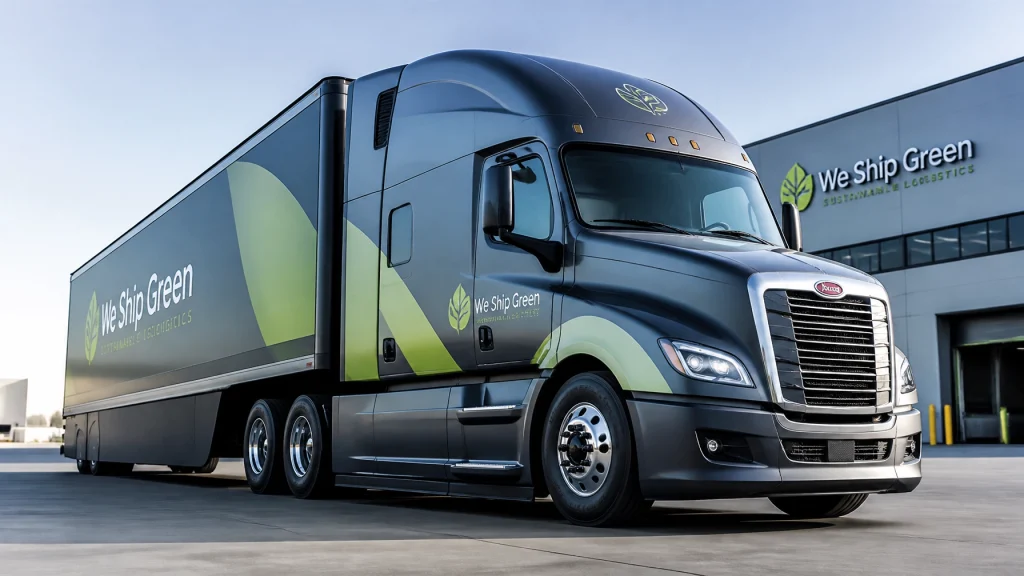
Sustainable Semi-Truck Solutions: The Ultimate Guide to Circular Fleet Branding
Most fleet managers think rebranding requires a full vinyl overhaul and days of expensive downtime… until they see how modular wraps save up to 50% on costs while actively protecting the planet. In an era where logistics marketing and environmental responsibility are becoming inextricably linked, the traditional approach to vehicle graphics is being replaced by a more sophisticated, circular model. This transformation is not merely about aesthetics; it is a fundamental shift in how we manage the lifecycle of fleet branding to ensure maximum return on investment and minimal ecological impact.
At We Ship Green, we recognize that the future of transportation marketing lies in the synergy between innovation and conservation. By adopting circular principles, companies can leverage their mobile billboards as powerful tools for both brand visibility and sustainability. This ultimate guide explores the mechanics of circular fleet branding, the financial advantages of modular vehicle wraps, and how integrating these solutions within a broader green ecosystem can future-proof your logistics operations.
Defining Durable Decals: The Concept of Circularity
Circular fleet branding is a strategic approach to vehicle graphics that prioritizes the longevity, adaptability, and recyclability of branding materials. Unlike traditional full-vehicle wraps that must be completely removed and discarded when a logo changes or a panel is damaged, circular systems utilize modular components. This methodology aligns with the broader circular economy, which seeks to decouple economic growth from resource consumption. By designing vehicle graphics that can be refreshed, repaired, and repurposed, fleet operators significantly reduce the demand for raw vinyl and the subsequent waste generated at the end of a campaign's lifecycle.
The foundation of this approach is the modular wrap. Instead of a single, continuous sheet of material, modular wraps consist of precision-cut panels tailored to the specific contours of the vehicle. This design allows for targeted updates: such as changing a sustainability message or updating a website URL: without disturbing the underlying branding. According to recent industry context from goTrucking.News, this adaptability is becoming essential as fleets transition toward more dynamic marketing strategies and frequent messaging updates.
Modular Methods: Maximum Marketing
The implementation of modular vehicle graphics represents a technological leap in fleet advertising. Utilizing advanced 3D scanning and precise digital templates, manufacturers can create kits that fit perfectly onto trucks, trailers, and delivery vans. This precision ensures that the transit advertising remains professional and visually striking, maintaining a high-fidelity appearance that reflects the quality of the brand. The modular nature of these wraps means that if a single panel is damaged during transit, it can be replaced in isolation. This eliminates the need for a full rewrap, ensuring the vehicle returns to the road with minimal delay and expense.
Furthermore, modular wraps facilitate a more agile approach to truck side advertising. Brands can experiment with seasonal campaigns or region-specific messaging by simply swapping out individual modules. This flexibility turns every vehicle into a dynamic marketing asset that can respond to market trends in real-time. Whether it is a promotion for a new product line or a celebration of a sustainability milestone, the ability to update graphics quickly and cost-effectively ensures that your fleet branding remains relevant and impactful.

Financial Fortitude and Fleet Future
The financial benefits of transitioning to a circular, modular branding model are substantial. Fleet managers can expect to see a reduction in branding costs of 35% to 50% over the lifetime of the vehicle. These savings are driven by three primary factors: reduced material costs, lower labor requirements, and significantly decreased vehicle downtime. Traditional wraps often require a vehicle to be off the road for several days, leading to lost revenue and logistical complications. In contrast, modular panels can often be installed in a single day, ensuring that your fleet remains operational and productive.
Beyond the immediate installation savings, the long-term ROI of fleet advertising is enhanced by the durability and ease of maintenance provided by modular systems. High-quality vehicle graphics from providers like Mobile Hwy Advertising offer a cost-per-impression that is significantly lower than traditional static billboards or digital ads. By maintaining the integrity of these graphics through modular repairs, companies can extend the life of their advertising investment, ensuring that their brand message continues to reach a wide audience without the recurring costs of frequent full rebrands.
Environmental Excellence and Ecosystem Evolution
Environmental stewardship is no longer an optional component of corporate strategy; it is a requirement for modern logistics companies. Modular wraps contribute to sustainability goals by reducing the total volume of vinyl waste by up to 73% compared to traditional methods. Vinyl production is resource-intensive, and the disposal of large-scale wraps contributes significantly to landfill waste. By minimizing the amount of material used and maximizing its lifespan, circular branding directly supports energy conservation and carbon reduction efforts.
Integrating these branding solutions with the We Ship Green ecosystem further amplifies their impact. For instance, combining modular wraps with aerodynamic wind skirt graphics not only provides additional space for mobile billboards but also improves fuel efficiency by up to 12%. When paired with the transition to electric vehicles, as highlighted by EV Across America, fleet branding becomes a visual testament to a company's commitment to a cleaner future. The branding itself serves as a communicative bridge, informing the public of the sustainable technologies: such as solar charging stations and electric drivetrains: that power the modern fleet.

Strategic Synergies: Solar and Software
The transition to a greener fleet involves more than just graphics; it requires a comprehensive integration of technology and infrastructure. Teltrans provides the telematics and logistics consulting necessary to optimize routes and reduce idle times, which in turn ensures that your truck advertising reaches the most high-traffic areas at the right times. This data-driven approach to transportation marketing ensures that every mile traveled contributes to both operational efficiency and brand exposure.
Furthermore, the physical infrastructure of the fleet can be utilized for branding and sustainability. Solar-powered charging stations, such as those showcased in the We Ship Green portfolio, offer prime opportunities for brand placement. These units provide a grid-independent charging solution for electric vehicles while serving as a stationary billboard for your commitment to renewable energy. This holistic approach ensures that every touchpoint of your logistics operation is aligned with the core values of your brand.

Cultivating Consistent Conservation
In conclusion, the ultimate guide to circular fleet branding reveals a path toward a more profitable and sustainable future for the logistics industry. By embracing modular wraps, companies can achieve significant cost savings, reduce their environmental footprint, and enhance their brand visibility through high-quality truck side advertising. The transition from a linear "wrap and discard" model to a circular "repair and refresh" strategy is a sophisticated evolution that meets the demands of modern consumers and regulators alike.
At We Ship Green, we are dedicated to helping fleet managers navigate this transition. Our expertise in logistics marketing, combined with our network of partners across the transportation sector, allows us to design and execute creative campaigns that resonate with audiences and drive results. We invite you to join us in cultivating a greener, more efficient world where your message travels with the fleet of the future. For expert consulting and innovative branding solutions that save both costs and the planet, visit We Ship Green today and discover how we can transform your fleet into a powerful engine for conservation and growth.