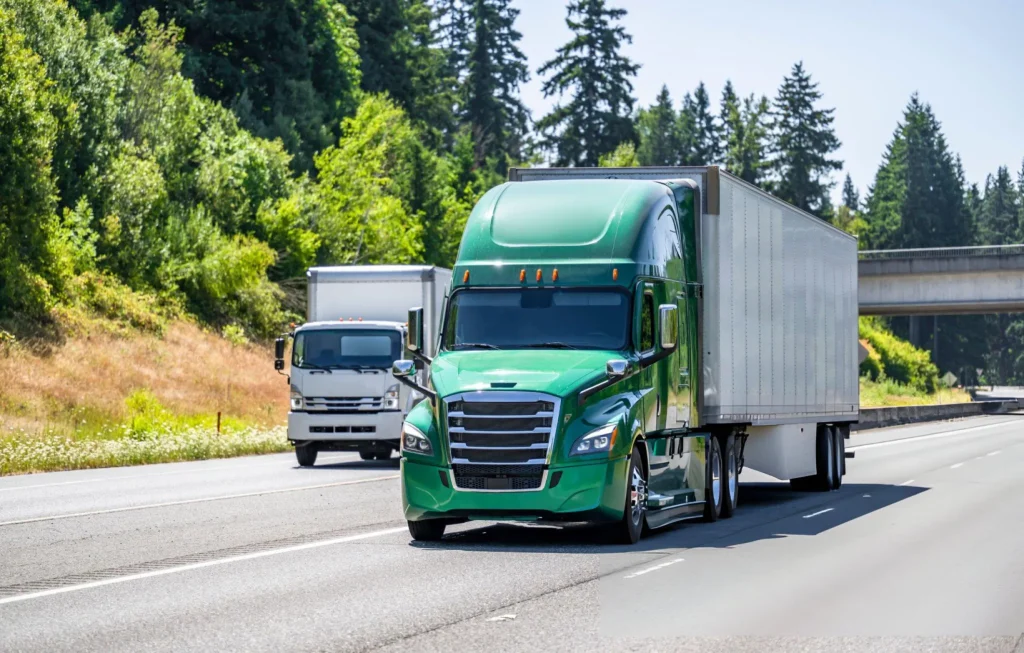
Sustainable Solutions: How Fleet Advertising and Green Logistics Drive the Future
The Green Growth Opportunity in Modern Logistics
Most transportation leaders think sustainability and advertising belong in separate budgets: until they see how an electrified, efficiently operated fleet can also become a high-impact communications platform. In 2026, the strongest logistics strategies are no longer limited to moving freight faster or reducing fuel consumption. They are designed to improve operational performance, demonstrate environmental responsibility, and create measurable visibility wherever a fleet travels.
This convergence is creating a new sustainable logistics ecosystem. Electric trucks, solar-powered charging infrastructure, aerodynamic improvements, data-led route planning, and professional fleet branding can work together to reduce waste while increasing market presence. At We Ship Green, we help connect fleet managers, brands, and transportation partners through solutions that make products more efficient to move and messages more valuable to deliver.
The opportunity is especially significant for organizations seeking credible sustainability communication. A company that invests in electric transportation, conservation, and renewable energy has a story worth sharing. When that story is presented through professional vehicle wraps, trailer graphics, charging-station media, and coordinated digital campaigns, sustainability becomes visible in the places where customers, employees, shippers, and communities encounter the transportation network every day.
Electric Trucks Establish a More Visible Standard
Electric trucks are becoming an important part of the future of regional delivery, drayage, and short-haul freight. Their zero-tailpipe-emission operation, lower noise levels, and advanced onboard technology make them highly visible examples of progress. Although the transition requires careful planning around vehicle range, charging capacity, payload, and route suitability, the strategic value extends beyond fuel and maintenance calculations.
As goTrucking.News reports, modern fleets are increasingly using telematics, predictive maintenance, AI-assisted dispatch, and integrated electric vehicle data to improve performance. These systems help fleet managers evaluate battery health, charging schedules, traffic conditions, driver behavior, and route efficiency in a unified operational environment. The environmental benefit is practical: fewer empty miles, better asset utilization, reduced idling, and more efficient energy use.
The electric truck itself can also become a powerful brand ambassador. Through carefully designed vehicle graphics, a clean-energy fleet can communicate a company’s commitment to conservation without relying on vague claims. A well-executed design may highlight solar charging, lower-emission delivery, renewable energy partnerships, or a broader commitment to responsible commerce. In this way, fleet branding reinforces the operational investment already being made.
Solar Charging Creates Stronger Sustainable Signals
Solar-powered charging stations provide another essential connection between green technology and public communication. Off-grid and solar-assisted charging systems can help fleets reduce dependence on conventional infrastructure, improve resilience, and support the gradual expansion of electric vehicles. Depending on the site, charging may be supported by solar canopies, stationary battery storage, microgrid controls, or autonomous solar charging units that can be deployed without extensive trenching.

The We Ship Green guide to solar charging station designs describes how autonomous arrays, heavy-duty charging hubs, solar canopies, microgrids, and corridor charging connections can support different fleet requirements. These installations are operational assets, but they are also visible proof points. A branded electric truck charging beneath a solar canopy communicates a more complete sustainability narrative than a conventional advertisement that simply uses green imagery.
The broader ecosystem extends through EVAcrossAmerica.com, which provides a platform for electric transportation and charging-related information, and Teltrans.net, which supports the consulting and operational planning required to evaluate fleet transitions. Together, these resources help companies consider the full system: vehicle selection, charging infrastructure, route design, workforce readiness, data collection, and communication.
Wind Skirt Graphics Combine Conservation and Communication
Aerodynamic improvements remain valuable across both conventional and electric fleets. Wind skirts, trailer side fairings, gap reducers, and related equipment can reduce drag and improve energy efficiency at highway speeds. For diesel fleets, improved aerodynamics may reduce fuel consumption. For electric trucks, lower aerodynamic resistance can help preserve battery energy and extend route flexibility.
Wind skirts also create an underused surface for professional branding. Because these components sit close to the sightline of passing motorists, they can support visual continuity between the tractor, trailer, and larger campaign design. The result is not merely a technical modification or decorative addition. It is a practical example of how conservation efforts and communication can occupy the same physical asset.

As outlined in the We Ship Green wind skirt graphics guide, aerodynamic improvements and visual design should be considered together. A fleet manager can reduce operational waste while creating an additional surface for truck advertising, sustainability messaging, or a partner campaign. This dual-purpose approach helps transform environmental investments from isolated cost centers into visible and potentially revenue-supporting assets.
Fleet Advertising Becomes Dynamic, Data-Led OOH
The 2026 out-of-home advertising environment is becoming more dynamic, audience-focused, and measurable. Fixed digital displays increasingly use data related to location, time of day, weather, traffic, and audience movement to improve relevance. The same principles can be applied to mobile formats. A fleet does not need a digital screen to participate in dynamic OOH; it can use data-led routing, flexible deployment, and coordinated campaign timing.
For brands, this means mobile billboards can be planned around retail openings, events, commuter patterns, freight corridors, and priority markets. Telematics and route data can help determine where a wrapped vehicle travels, how frequently it appears in a target area, and which audiences are most likely to encounter it. The campaign can then be integrated with social, search, connected television, QR codes, and landing pages.
In high-traffic urban and suburban markets, a wrapped vehicle may be modeled to generate approximately 30,000 to 80,000 daily impressions, depending on route density, traffic conditions, vehicle type, schedule, and audience methodology. These figures should be treated as planning ranges rather than universal guarantees. Responsible fleet advertising uses traffic counts, mobility data, route histories, and transparent assumptions to establish realistic reach.
This approach positions transit advertising as a measurable component of modern transportation marketing. A vehicle wrap is not simply placed and forgotten. It can be assigned to specific routes, aligned with a campaign flight, connected to a unique offer, and evaluated through brand lift, web traffic, lead generation, or store-visit analysis.
The Ecosystem Approach Strengthens Long-Term Results
The greatest value emerges when the technology, operations, and marketing functions are coordinated. MobileHwyAdvertising.com helps develop advertising opportunities through vehicle wraps, truck side advertising, and mobile campaigns. Teltrans.net contributes consulting and transportation expertise. EVAcrossAmerica.com supports awareness around electric mobility and charging infrastructure. goTrucking.News provides current transportation context, including coverage of fleet innovation and the J.B. Hunt and UP.Labs venture lab.
The J.B. Hunt and UP.Labs initiative, as covered by goTrucking.News, demonstrates how major transportation organizations are pursuing software, data, and startup partnerships to solve complex freight challenges. Although the venture lab is focused primarily on digital logistics innovation rather than advertising, its emphasis on better execution, operational intelligence, and commercial scalability reflects the same direction that sustainable fleet marketing must follow: measurable, integrated, and designed for long-term value.
At We Ship Green, our role is to help bring these opportunities together. We connect brands with fleets, support creative campaign development, and help transportation companies present their conservation efforts with clarity and credibility. The objective is not green messaging for its own sake. It is the cultivation of an ecosystem in which cleaner operations, efficient infrastructure, and high-impact advertising reinforce one another.
A Greener Future Requires Visible Action
The future of logistics will be shaped by companies that understand sustainability as both an operational responsibility and a market opportunity. Electric trucks can reduce emissions. Solar charging can strengthen energy resilience. Wind skirts can improve efficiency. Data-led route planning can reduce waste. Professional vehicle wraps and mobile billboards can ensure that these investments are seen, understood, and remembered.
The most effective strategy is not to choose between green logistics and powerful marketing. It is to design them as complementary solutions. When every mile supports efficient freight movement and purposeful communication, the fleet becomes more than transportation equipment. It becomes a moving demonstration of innovation, conservation, and responsible growth.
For fleet partnerships, logistics marketing, vehicle graphics, or sustainable transportation solutions, contact:
We Ship Green
274 Mt Harvard Ave
Windsor, CO 80550
Phone: (323) 255-1212
Email: info@weshipgreen.com
Website: https://weshipgreen.com/